
 English
 العربية
 Français
 Deutsch
 Italiano
 日本語
日本語 한국어
한국어 Polski
 Português
 Русский
 Español
 ภาษาไทย
 Türkçe
 Українська
 Tiếng Việt
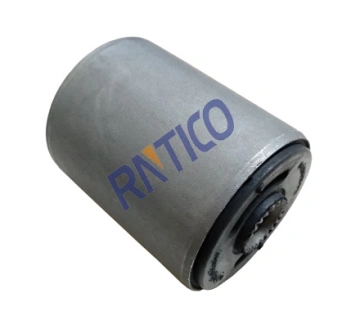
A rubber bushing is a mechanical component that is made of rubber bonded to metal.
Its primary function is to act as an interface between two parts, typically metal components, to dampen energy transfer and reduce vibrations and noise.
They provide a buffer between moving parts, reducing wear and tear and improving overall performance and durability.
It also allows for a controlled amount of movement between the parts while minimizing unwanted energy transmission.
Benefits
Rubber bushings offer several key advantages stemming from their material properties and design:
Vibration and Shock Absorption:
Rubber’s inherent elasticity effectively absorbs vibrations and shocks, reducing noise and protecting connected components from damage.
This is crucial in applications where machinery or vehicles experience significant vibrations, such as automotive suspension systems and industrial machinery.
Noise Reduction:
Rubber bushings significantly reduce noise transmission between connected parts by dampening vibrations.
This is beneficial in applications where noise reduction is critical, such as vehicles and appliances
Flexibility and Controlled Movement:
Rubber bushings can control movement between connected components, accommodating misalignment and preventing excessive stress.
This flexibility is essential in applications where precise alignment is difficult to maintain or some movement is necessary for proper function.
Reduced Friction and Wear:
The rubber acts as a lubricant, reducing friction and wear between moving parts.
This extends the lifespan of the connected components and reduces maintenance requirements.
Load Transfer and Isolation:
Rubber bushings can effectively transfer loads while isolating vibrations, protecting sensitive equipment from harsh operating conditions.
However, it’s important to note that rubber bushings also have some limitations.
They can wear out over time, especially in environments with oils or extreme temperatures.
Their flexibility can also negatively impact precision in some applications.
Application
Rubber bushings are versatile components with a wide range of applications across various industries.
Their primary function is to isolate, cushion, and dampen vibrations and shocks, providing mechanical support and reducing friction between moving parts.
Here are some of the main applications:
Automotive Industry
This is perhaps the most common application of rubber bushing, which we will extensively use in different systems of vehicles.
For example, we will use them in the suspension system, acting as cushions between the chassis and suspension components, absorbing shocks, and improving ride comfort.
Also, they are using in engine to isolate the engine from the vehicle’s frame, reducing vibrations transmitted to the cabin.
Industrial Machinery
In industrial settings, rubber bushings are used to reduce noise and vibrations in machinery, extending the lifespan of components.
Also, they can provide flexible connections in various equipment, and act as shock absorbers and vibration insulators.
Electronics and Appliances
Rubber bushings help dampen vibrations and reduce noise in electronics and appliances, improving performance and user experience.
Aerospace and Aviation
The aerospace industry utilizes rubber bushings in aircraft landing gear, engine mounts, and other critical components to absorb shocks and vibrations.
Construction and Infrastructure
In construction, they can be used in building foundations and bridges to isolate vibrations and provide flexible connections.
Other Applications
Beyond these major sectors, rubber bushings find applications in various other areas where vibration damping, shock absorption, and noise reduction are crucial.
The specific type of rubber bushing used will depend on the application’s requirements, including the level of vibration damping needed, the load capacity, and the operating environment.
Conclusion
While often cylindrical, rubber bushings come in various shapes and sizes depending on the application.
They are made from natural or synthetic rubber, and their different properties affect their suitability for various environments and applications.
Overall, rubber bushings play a crucial role in many mechanical systems by enhancing performance and extending equipment life.