
 English
 العربية
 Français
 Deutsch
 Italiano
 日本語
日本語 한국어
한국어 Polski
 Português
 Русский
 Español
 ภาษาไทย
 Türkçe
 Українська
 Tiếng Việt
A Systematic Guide to Troubleshooting Rubber Shock Absorbers
The failure of rubber shock absorbers normally leads to excessive and unusual vibration in industrial machinery, which is originally designed to prevent vibrations.
It is more than a mere nuisance. It serves as a critical harbinger of underlying issues, often indicating component degradation or imminent failure.
If left unchecked, it accelerates wear on bearings, seals, and structural components, leading to unplanned downtime, costly repairs, and potential safety hazards.
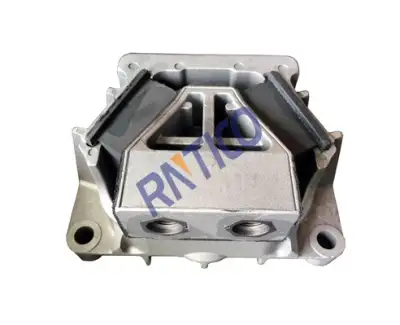
Among the most common yet frequently overlooked culprits are the very elements designed to prevent vibration: rubber gaskets, mounts, bushings, and isolators.
This guide provides a systematic, detailed methodology for diagnosing the root causes of abnormal vibration and specifically troubleshooting failures in these essential rubber shock absorbers.
The Diagnostic Pathway: From Observation to Resolution
Fundamentally, the diagnostic process follows a logical, escalating pathway from initial observation to precise correction.
Phase 1: Initial Assessment & Visual Inspection
We begin with a thorough sensory and operational assessment.
- Vibration Sensation: What does the vibration feel like? Is it a constant hum, a rhythmic pounding, or an irregular shudder?
- Correlation Analysis: Crucially, the onset of vibration must be correlated with specific operational changes. Did the anomaly appear after recent maintenance, a change in load, a shift in rotational speed, or following a period of prolonged idle time?
Concurrently, we conduct a comprehensive visual inspection of all rubber components.
- Looking for Signs: We search for tell-tale signs of compromise: visible cracks (crazing), permanent compression set (where the mount no longer returns to its original shape), oil-induced swelling or disintegration, surface hardening (loss of elasticity), or physical tears.
- Peripheral Checks:Furthermore, we check for loose fasteners securing the mounts and ensure no external objects are contacting the equipment, as these simple issues can mimic more complex faults.
Phase 2: Technical Analysis & Vibration Measurement
Following this preliminary evaluation, we advance to a more technical analysis phase. During this phase, we employ specific measurement and data collection techniques.
- Vibration Measurement: Using a vibration analysis tool, from a simple vibrometer to a sophisticated spectrum analyzer, we measure amplitude (severity) and frequency. The frequency signature is particularly diagnostic.
For example, vibration at 1x the rotational speed often indicates imbalance, while frequencies at 2x or 3x may point to misalignment or mechanical looseness.
Notably, the presence of very high-frequency vibrations can signal issues like cavitation or gear mesh problems, which may transmit through but are not caused by the mounts.
- Controlled Testing: During this phase, we also perform controlled tests.
Does temporarily adjusting the operational load or speed significantly change the vibration profile?
Can we safely isolate certain subsystems to see if the vibration ceases? These steps help narrow the field of potential sources.
Phase 3: Root Cause Analysis of Damper Failure
After gathering this data, we then focus intently on the rubber shock absorbers themselves. The primary function of these parts is to absorb kinetic energy and isolate vibrations; their failure directly results in increased force transmission.
Common Failure Modes of Rubber Shock Absorber Components
The failure modes are distinct and traceable to specific root causes:
Aging and Environmental Degradation
Over time, ozone, oxygen, and UV radiation attack the polymer chains in rubber, causing them to cross-link and become brittle. This results in surface cracking (weather checking), a profound loss of damping capability, and ultimately, fracture. Consequently, equipment installed in hot, sunny, or ozone-rich environments is especially vulnerable.
Chemical Attack and Fluid Incompatibility
Exposure to incompatible oils, solvents, or chemicals is a primary killer of rubber components. Certain fluids cause the rubber to swell excessively, softening it and drastically reducing its stiffness and load-bearing capacity.
Conversely, other agents extract plasticizers, leading to shrinkage and hardening. Therefore, identifying any new fluid contact or leaks is paramount.
Permanent Set and Overload
Rubber shock absorbers operate under a designed static compression. Persistent overload or exposure to temperatures beyond their specification causes a permanent deformation, known as compression set.
As a result, the mount sags, the equipment’s alignment shifts, and the system’s natural frequency changes, often amplifying rather than isolating vibrations.
Similarly, shock loads beyond the design limit can cause internal delamination or sudden rupture.
Improper Installation or Selection
This is a surprisingly common issue. Using an underspecified mount for the applied load, installing it in a pre-compressed or twisted state, or allowing metal-to-metal contact because the mount is too short, all lead to immediate and catastrophic performance failure.
Moreover, using the wrong type of isolator will not solve the vibration problem. For example, a shear mount was installed where a compression mount was needed.
Implementing Corrective Actions and Verification
Ultimately, the diagnosis culminates in targeted corrective action and verification.
- Component Replacement:If the rubber component shows any signs of the failures described above, replacement is non-negotiable.
- Correct Selection: When selecting replacements, we must ensure they are not only dimensionally identical but also possess the correct chemical resistance (such as EPDM for weather resistance, NBR for oils, and CR for ozone), load rating, and dynamic stiffness for the application.
- Correct Installation: Installation is critical. We follow the manufacturer’s torque specifications precisely, ensure the equipment’s weight is evenly distributed across all mounts, and verify that piping or electrical conduits do not create a “short circuit” that bypasses the new isolators.
- Effect Verification: Finally, after replacement, we must re-measure the vibration levels under the same conditions as the initial diagnosis. A significant reduction in amplitude confirms a successful intervention and validates the entire diagnostic process.
Conclusion: Silencing the Noise of Dysfunction
In conclusion, resolving abnormal equipment vibration through effective troubleshooting of rubber components requires a disciplined and investigative approach.
It moves from broad observation to specific measurement, from symptom recognition to root-cause analysis of material failure.
By understanding the intimate relationship between vibration signatures and the physical condition of elastomeric isolators, maintenance teams can transition from reactive part-swapping to predictive, precision repair.
This methodology not only restores immediate operational smoothness but also extends machinery life, enhances process reliability, and delivers substantial long-term cost savings by preventing secondary damage.
The key takeaway is that the vibration itself is the machine’s communication; learning its language allows us to silence the noise of dysfunction with targeted, effective solutions.
Partner with RNTICO for Your Vibration Solutions
RNTICO has over 30 years of experience in providing solutions for abnormal vibrations. Our experienced engineering team can provide you with customized solutions based on the specific problems you face.
Please feel free to contact us if you need help resolving abnormal vibration issues.
Frequently Asked Questions
Q: What are the main products manufactured by RNTICO?
A: RNTICO is a leading Chinese supplier of high-quality rubber products, integrating R&D, production, and sales. Its main products include rubber parts, rubber hoses, car mats, bolster springs, shear mounts, engine mounts, chevron springs, and other anti-vibration rubber components.
Q: Can RNTICO produce the customized rubber products according to the client’s requirements?
A: Yes, RNTICO can develop and produce customized rubber products according to the client’s drawings or requirements.
Q: Which industries are RNTICO‘s main products applied to?
A: Based on client requirements, RNTICO can produce rubber products suitable for various industries, such as heavy-duty trucks, construction machinery, and railway vehicles.
Q: What are the advantages of RNTICO products?
A: RNTICO can independently design rubber formulations according to product requirements. Products can meet requirements such as wear resistance, high and low temperature resistance, acid/alkali resistance, and high elasticity.
Q: What’s the minimum order quantity of RNTICO products?
A: The minimum order quantity for RNTICO products depends on the actual product size. Please contact us via WhatsApp at 86-18149510829 or sales@rntico.com for details.
Q: How should I send the inquiry or place the order to RNTICO?
A: You can contact RNTICO staff via WhatsApp: 86-18149510829 or sales@rntico.com to send an inquiry or place an order.