
 English
 العربية
 Français
 Deutsch
 Italiano
 日本語
日本語 한국어
한국어 Polski
 Português
 Русский
 Español
 ภาษาไทย
 Türkçe
 Українська
 Tiếng Việt
Rubber seal strip is the nameless hero of countless industries, performing the critical task of creating barriers against environmental elements.
From the automotive sector to aerospace, and from household appliances to complex industrial machinery, these components prevent the ingress of water, dust, gases, and noise while retaining fluids and pressures.
However, the failure of a rubber seal strip, often a small and inexpensive part, can lead to catastrophic system breakdowns, costly repairs, and significant safety hazards.
Therefore, exploring the key rubber seal failure causes is paramount. More importantly, we should know how to prevent such failures, which is critical for ensuring reliability and longevity.
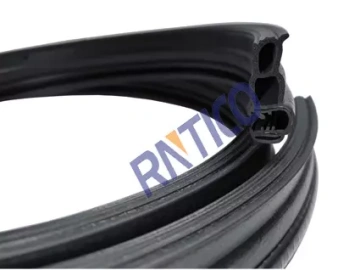
A Multifaceted Onslaught: Primary Rubber Seal Failure Causes
Rubber sealing strip failure is rarely due to a single factor.
Instead, it typically results from a complex interplay of environmental, chemical, and physical stresses. the root cause behind rubber seal failure causes is the first step toward implementing an effective solution.
To begin with, environmental and chemical exposure stands as a leading cause of degradation. Rubber materials are highly susceptible to attack from various agents.
For instance, ozone cracking is a classic failure mode in unsaturated elastomers such as NR and SBR.
Ozone in the atmosphere attacks double bonds in the polymer chain, causing characteristic small, deep cracks perpendicular to the applied stress.
Therefore, oxidation from prolonged exposure to oxygen and heat leads to the breakdown of polymer chains, making the rubber hard, brittle, and cracked, a process accelerated by elevated temperatures.
Concurrently, fluid incompatibility is a major issue.
Exposure to incompatible oils, solvents, fuels, or acids can cause either excessive swelling, which softens the seal and reduces sealing force, or extraction of plasticizers, which leads to shrinkage and hardening.
Each fluid interacts uniquely with different elastomer types.
Furthermore, thermal extremes profoundly impact seal performance.
High temperatures accelerate all chemical degradation processes, such as oxidation, significantly reduce tensile strength, and can cause permanent compression set. The seal loses its elasticity and does not spring back after compression by then.
On the other hand, low temperatures below a seal’s glass transition point cause the rubber to harden and lose its elastomeric properties, leading to poor sealing force and potential brittle fracture during installation or operation.
Therefore, thermal cycling between high and low temperatures induces repeated expansion and contraction, causing fatigue and stress at sealing interfaces.
Furthermore, improper installation is a common cause of failure due to human error.
A Proactive Defense: Strategic Solutions and Preventive Measures
Addressing rubber seal strips’ failure requires a holistic, proactive approach that spans material science, engineering design, and quality control.
The solutions directly counteract the causes outlined above.
Foremost, strategic material selection and compounding are the cornerstones of seal reliability.
The single most effective action is choosing an elastomer specifically engineered for the service environment.
For high-temperature and aggressive fluid applications, fluorocarbons (FKM/Viton®) or perfluoroelastomers (FFKM) offer exceptional resistance.
As for ozone and weather exposure, EPDM is excellent.
For a broad range of oils and temperatures, hydrogenated nitrile (HNBR) outperforms standard NBR. Beyond the base polymer, expert compounding with protective additives is crucial.
This includes antiozonants, antioxidants, UV stabilizers, and specialized fillers that enhance resistance to specific degradation mechanisms.
For dynamic applications, internal lubricants like graphite or PTFE can be incorporated to reduce friction and wear.
Using anti-extrusion rings (backup rings) made of PTFE or hard plastic in high-pressure systems is a proven solution.
Additionally, ensuring a superb surface finish on the metal mating components minimizes abrasive wear.
Properly designing and deburring all installation pathways to eliminate sharp edges and chamfering all leads is essential to prevent installation damage.
What’s more, controlling the operational environment within specified limits extends the rubber sealing strips’ life dramatically.
This involves implementing effective thermal management systems (cooling, insulation) to keep temperatures within the seal material’s rated range.
Similarly, employing filtration systems for hydraulic fluids and lubricants removes abrasive particles that accelerate wear.
For seals exposed to sunlight or ozone, using protective covers, shields, or coatings can block direct UV radiation and reduce ozone concentration at the seal surface.
Handling, storage, and installation protocols are equally important.
Rubber seal strip must be stored in a cool, dark, dry place away from ozone sources (e.g., electric motors) and in sealed packaging to slow aging.
Synthesizing the Strategy for Success
In conclusion, rubber seal strip failure is a predictable consequence of material-environment mismatch, poor design, or procedural oversight, rather than mere random chance.
The path to reliability is built on a deep understanding of the failure mechanisms: chemical attack, thermal stress, physical wear, and installation trauma.
The corresponding solutions form an integrated defense-in-depth strategy.
It starts with the intelligent selection and compounding of the elastomer, proceeds through precision engineering of the rubber sealing strips and their housing. And it’s upheld by controlled operating conditions and meticulous handling practices.
By proactively addressing these factors, engineers and maintenance professionals can transform rubber sealing strips from potential points of vulnerability into dependable, long-lasting components.
Ultimately, this proactive approach safeguards system integrity, ensures operational safety, and delivers significant cost savings by preventing downtime and catastrophic failures. Thereby securing the seamless performance of the myriad systems that depend on these vital, though often overlooked, components.
RNTICO has focused on the field of rubber seal strips for decades. We insist on using high-quality raw materials to produce products in order to meet the diverse needs of our customers.
Please feel free to contact us if you have demands for rubber seal strips.
Frequently Asked Questions
Q: What products does RNTICO mainly manufacture?
A: RNTICO is a leading Chinese supplier of high-quality rubber products, integrating R&D, production, and sales. Its main products include various types of rubber parts.
Including rubber seal strips, bolster springs, shear mounts, engine mounts, chevron springs, car mats, and other anti-vibration rubber components.
Q: Can RNTICO produce the customized rubber products according to the clients’ requirements?
A: Yes, RNTICO can develop and produce customized rubber products according to the client’s drawings or requirements.
Q: Which industries are RNTICO‘s main products applied to?
A: RNTICO can produce rubber products suitable for various industries, such as heavy-duty trucks, construction machinery, railway vehicles, and home applications based on the client’s requirements.
Q: What are the advantages of RNTICO products?
A: RNTICO can independently design rubber formulations according to product requirements. Products can meet requirements such as wear resistance, high and low temperature resistance, acid/alkali resistance, and high elasticity.
Q: What’s the minimum order quantity of RNTICO products?
A: The minimum order quantity for RNTICO products depends on the actual product size. Please contact us via WhatsApp at 86-18149510829 or sales@rntico.com for details.
Q: How should I send the inquiry or place the order to RNTICO?
A: You can contact RNTICO staff via WhatsApp: 86-18149510829 or sales@rntico.com to send the inquiry or place the order.