
 English
 العربية
 Français
 Deutsch
 Italiano
 日本語
日本語 한국어
한국어 Polski
 Português
 Русский
 Español
 ภาษาไทย
 Türkçe
 Українська
 Tiếng Việt
The chemical processing environment presents unique challenges to fluid transfer systems. Among them, rubber hoses are one of the most critical yet often overlooked components.
An inappropriate choice here can lead to catastrophic consequences. Such as leaks, spills, product contamination, equipment damage, and severe safety hazards.
Consequently, choosing the correct rubber hose is more than just a procurement task. It is a fundamental engineering decision impacting safety, efficiency, and operational integrity.
This guide serves as a comprehensive rubber hose selection guide for chemical processing, moving beyond basic catalog lookups to a systematic evaluation of critical parameters that ensure optimal performance in harsh chemical environments.
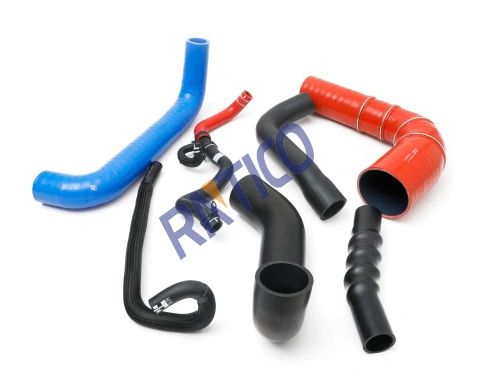
The Foundation: Chemical Compatibility
In any selection process, especially within our rubber hose selection guide for chemical processing, chemical compatibility is the primary and non-negotiable factor. The hose’s inner tube (liner) must be completely resistant to the fluid being conveyed.
Importantly, we must consider both the primary chemical and any potential contaminants, mixtures, and cleaning agents. Compatibility encompasses two main aspects: permeability and chemical attack.
On one hand, permeation involves the diffusion of fluid molecules through the tube wall, which can lead to weight loss, hose stiffness, emission of vapors, and contamination of the surroundings.
On the other hand, the chemical attack includes swelling, softening, cracking, or embrittlement of the elastomer.
For instance, a hose with a standard NBR (Nitrile) tube might be suitable for petroleum-based oils but would degrade rapidly when exposed to ozone or ketones.
Conversely, EPDM rubber exhibits excellent resistance to ozone, steam, and many polar chemicals but performs poorly with hydrocarbon oils.
Operating Conditions: Pressure, Temperature, and Vacuum
Following compatibility, the operational envelope defines the hose’s construction requirements, another critical section of our rubber hose selection guide for chemical processing.
We must account for three key physical parameters: working pressure, temperature range, and the potential for vacuum or suction conditions.
Firstly, the hose’s maximum working pressure must exceed the system’s peak operating pressure, including any surge pressures.
Secondly, there are two aspects to consider regarding temperature: the temperature of the internal fluid and the temperature of the external environment.
The hose material must maintain its physical properties and flexibility across the entire range.
Excessive heat can cause premature aging, cracking, and pressure derating, while extreme cold can make some rubber compounds brittle.
Similarly, if the external heat sources, like radiant heat from nearby equipment, affect the hose, we should factor it in.
Thirdly, for suction applications, the hose must be reinforced to resist collapse.
For a low to medium vacuum environment, simple spiral steel wire reinforcement is usually used; while for a complete vacuum environment, rigid spiral steel wire reinforcement is usually required to be embedded in the hose wall.
If the vacuum pump’s design is not correct, it may cause the hose to collapse, limit the flow rate, and damage the pump.
Material Selection: Elastomers and Reinforcement
The core of the hose’s performance lies in its material composition, both the elastomers and the reinforcement—a vital part of any rubber hose selection guide for chemical processing.
Common Tube (Liner) Elastomers:
NBR (Nitrile Butadiene Rubber): Suitable for oils, fuels, greases, and many hydrocarbons, it offers a good balance of abrasion resistance and flexibility.
EPDM (Ethylene Propylene Diene Monomer): Excellent for hot water, steam, brake fluids, many acids and alkalis, and ozone-rich environments, its weathering resistance is superior.
CR (Chloroprene / Neoprene): A good general-purpose elastomer with moderate resistance to oils, weather, ozone, and abrasion. Often used for water, air, and some chemical services.
FKM (Fluoroelastomer / Viton®): The premium choice for aggressive chemicals, high temperatures, and aromatic hydrocarbons. It is used where most other elastomers fail, albeit at a higher cost.
SI (Silicone) is favored for its high-temperature flexibility, low odor/taste transfer, and suitability in food and pharmaceutical applications. However, it generally has lower abrasion resistance.
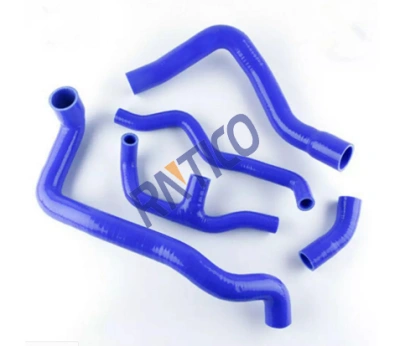
Reinforcement Layers: Reinforcement provides strength and defines pressure capability.
The main types are:
Textile Braid: One or more layers of woven synthetic yarn (like polyester or aramid). Used for low to medium pressures. Provides good flexibility.
Wire Braid: Single or double braids of high-tensile steel wire.
This is the standard for high-pressure hydraulic and industrial applications. Offers excellent strength with moderate flexibility.
Wire Spiral: Multiple layers of spirally wound steel wire.
Designed for very high pressures and extreme impulse fatigue resistance. Less flexible than braided designs.
Textile Spiral: Used in larger diameter hoses for suction and discharge applications. Provides crush resistance without excessive weight.
Installation, Inspection, and Maintenance
Finally, improper installation and maintenance will cause hose failure even if we choose the hose perfectly.
Ensure routing avoids sharp bends, twisting, abrasion against surfaces, and exposure to excessive external heat.
Use proper bend restrictors or supports where needed. Implement a regular inspection schedule.
Look for signs of degradation: cracks in the cover, blistering, soft spots, oxidation, coupling pull-back, or leaks.
Hoses in chemical service have a finite service life, and we should replace them proactively based on manufacturer guidelines and inspection history, not just upon failure.
Conclusion
In summary, systematic selection of rubber hoses for the chemical industry is a multi-faceted process that demands careful attention.
To begin with, chemical compatibility forms the absolute foundation.
Subsequently, a thorough analysis of operating conditions, pressure, temperature, and vacuum defines the necessary strength and construction.
Following this, choosing the correct elastomer and reinforcement type tailors the hose to its specific duty.
Moreover, special requirements like static conductivity and regulatory compliance must be integrated into the decision.
Ultimately, coupling this informed selection with proper installation and vigilant maintenance creates a reliable, safe, and efficient fluid transfer system.
Therefore, by treating hose selection as a critical engineering activity, plants can significantly mitigate risk, reduce downtime, and ensure the long-term integrity of their operations.
RNTICO has over 30 years of experience in developing and producing rubber hoses. Our experienced engineering team can provide all types of rubber hoses based on the client’s requirements.
Please feel free to contact us if you need help.
Frequently Asked Questions
Q: What products does RNTICO mainly manufacture?
A: RNTICO is a leading Chinese supplier of high-quality rubber products, integrating R&D, production, and sales. Its main products include various types of rubber parts, rubber hoses, bolster springs, shear mounts, engine mounts, chevron springs, car mats, and other anti-vibration rubber components.
Q: Can RNTICO produce the customized rubber products according to the clients’ requirements?
A: Yes, RNTICO can develop and produce customized rubber products according to the client’s drawings or requirements.
Q: Which industries are RNTICO‘s main products applied to?
A: RNTICO can produce rubber products suitable for various industries, such as heavy-duty trucks, construction machinery, railway vehicles, and home applications, based on the client’s requirements.
Q: What are the advantages of RNTICO products?
A: RNTICO can independently design rubber formulations according to product requirements. Products can meet requirements such as wear resistance, high and low-temperature resistance, acid/alkali resistance, and high elasticity.
Q: What’s the minimum order quantity of RNTICO products?
A: The minimum order quantity for RNTICO products depends on the actual product size. Please contact us for more information.
Q: How should I send the inquiry or place the order to RNTICO?
A: You can contact RNTICO staff via WhatsApp: 86-18149510829 or sales@rntico.com to send the inquiry or place the order.