
 English
 العربية
 Français
 Deutsch
 Italiano
 日本語
日本語 한국어
한국어 Polski
 Português
 Русский
 Español
 ภาษาไทย
 Türkçe
 Українська
 Tiếng Việt
To produce high-quality rubber products, it is necessary to strictly control the entire production process and pay attention to various procedures such as raw material selection, mixing, molding, vulcanization, and post-processing.
Here are the key steps and points of production:
Selection of raw materials
• Rubber raw materials selection
Choose the appropriate natural rubber or synthetic rubber according to the product requirements.
Natural rubber has good elasticity and wear resistance, while synthetic rubber has a wider range of performance and application.
• Preparation of additives
This includes fillers (such as carbon black and silica), vulcanizers (such as sulfur and peroxide), accelerators, antioxidants, etc.
The selection and ratio of these additives will directly affect the performance of rubber products.
Plasticizing and mixing
• Plasticizing
Raw rubber is elastic but lacks plasticity during processing.
Therefore, it is necessary to plasticize the raw rubber to improve its plasticity and facilitate subsequent processing.
There are two methods of plasticizing: mechanical plasticizing and hot plasticizing.
• Mixing
Even mixing the plasticized raw rubber with various additives is an important process in the production of rubber products.
After mixing, the rubber material is called mixed rubber, which is a semi-finished material used to manufacture various rubber products.
The producer should control the temperature and time during the mixing process to ensure uniform mixing and prevent the rubber from overheating and degradation.
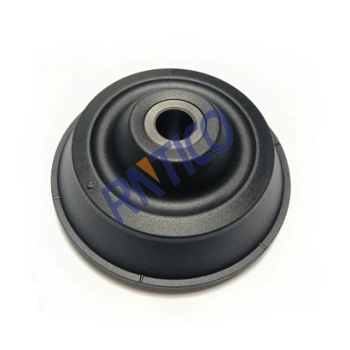
Product molding
• Mold making: Make the corresponding mold according to the shape and size of the product.
• Molding method
Generally, common molding methods include compression molding, injection molding, and extrusion molding.
Compression molding is suitable for products with complex shapes, injection molding is suitable for mass production, and extrusion molding is often used to produce continuous profiles such as rubber hoses and rubber sealing strips.
Vulcanization
• Purpose of vulcanization
Change the molecular structure of rubber through a vulcanization reaction to improve its strength and elasticity.
• Vulcanization equipment: Use a vulcanizing machine to proceed with vulcanization.
• Vulcanization process
It is carried out under a certain temperature and pressure, and the vulcanization time depends on the type and thickness of the rubber materials.
The producer should control the temperature, pressure, and time strictly during the vulcanization process to ensure complete vulcanization and avoid rubber materials aging.
Post-processing
• Cooling: After we complete the vulcanization, wait for the product to cool before proceeding with subsequent processing.
• Trimming
Trim the molded product, such as removing excess scraps, polishing, etc., to improve the product’s appearance and dimensional accuracy.
• Inspection: Perform quality inspection on the product, including appearance inspection, dimensional measurement, physical performance testing, etc., to ensure that it meets relevant requirements.
Packaging and storage
• Packaging: Qualified rubber products should be packaged for transportation and storage.
• Storage: The receiver should store the rubber products in a cool, dry place, away from direct sunlight and high-temperature environments to prevent aging and deformation.
Quality Control and Improvement
• Strengthen supervision: Establish a sound supervision system to supervise and inspect each procedure in the production process, and promptly discover and solve quality problems.
• Improve production technology: Reduce errors in the production process and improve product quality by optimizing production process parameters.
In summary, producing high-quality rubber products requires strict control of the entire production process, and we should pay attention to the selection of raw materials, mixing, molding, vulcanization, and post-processing.
At the same time, strengthening quality control and process improvement are also important ways to improve product quality.