
 English
 العربية
 Français
 Deutsch
 Italiano
 日本語
日本語 한국어
한국어 Polski
 Português
 Русский
 Español
 ภาษาไทย
 Türkçe
 Українська
 Tiếng Việt
In heavy-duty trucks and engineering machines, every part is important for performance, safety, and durability.
Among these critical parts, the torque rod bush stands out as a small yet indispensable element that significantly contributes to vehicle stability and operational efficiency.
This article explores the multifaceted benefits and diverse applications of torque rod bushes, highlighting their essential role in modern mechanical systems.
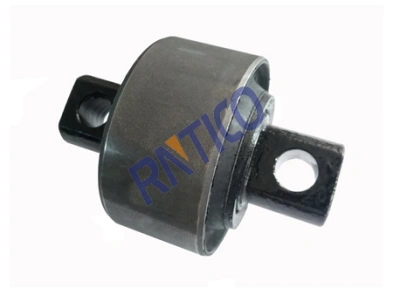
What Exactly Is a Torque Rod Bush?
A torque rod bush, also known as a torsion rubber bush, is a specialized component made from rubber bonded to metal.
It serves as a flexible connector in suspension and chassis systems, particularly in heavy vehicles.
Its primary function is to absorb shocks, reduce vibrations, and minimize noise while providing controlled flexibility between connected parts.
By leveraging the elastic properties of rubber and the structural strength of metal, torque rod bushes offer a unique combination of resilience and reliability.
The Core Advantages of Using Torque Rod Bushes
First, Enhanced Vibration Damping
One of the most significant benefits of torque rod bushes is their exceptional ability to dampen vibrations.
Heavy trucks and construction equipment operate under demanding conditions, often encountering rough terrains and dynamic loads.
The rubber element in the bush acts as a cushion, absorbing energy from vibrations and shocks.
This not only improves driver comfort but also protects other vehicle components from excessive wear and tear.
Second, Noise Reduction
In addition to vibration control, torque rod bushes contribute to a quieter operation.
Metal-to-metal contact in machinery often generates harsh noises, and a torque rod bush can provide the rubber isolation to mitigate these noises.
This noise reduction is particularly valuable in urban construction sites or long-haul transportation, where minimizing acoustic pollution is increasingly important.
Third, Improved Stability and Handling
Torque rod bushes help maintain alignment and stability in suspension systems.
By allowing limited and controlled movement, they ensure that wheels and axles remain properly positioned during acceleration, braking, and cornering.
This leads to better handling, increased safety, and reduced risk of accidents caused by instability.
Fourth, Durability and Long Service Life
Thanks to their robust construction, rubber bonded to metal, these bushes resist deformation, corrosion, and fatigue even under extreme conditions.
They require minimal maintenance and offer long-term reliability, making them a cost-effective solution for fleet operators and machinery owners.
Fifth, Load Distribution
Heavy vehicles often carry uneven or shifting loads.
Torque rod bushes aid in distributing stress evenly across connected components, preventing localized wear and extending the lifespan of entire assemblies such as axles, frames, and suspension links.
Where Torque Rod Bushes Shine: Key Applications
1) Heavy-Duty Trucks and Trailers
In commercial transportation, torque rod bushes are integral to the suspension system.
They connect the axle to the chassis, allowing the vehicle to handle heavy loads while smoothing out road irregularities.
This application is crucial for ensuring cargo safety, driver comfort, and regulatory compliance.
2) Construction and Mining Equipment
Bulldozers, excavators, loaders, and other earth-moving machines operate in harsh environments with constant impacts and vibrations.
Torque rod bushes are used in their suspension and articulation joints to enhance durability and operational precision.
3) Agricultural Machinery
Tractors and harvesters benefit from the shock-absorbing properties of torque rod bushes.
These components help stabilize implements and reduce stress on mechanical structures during field operations, thereby improving efficiency and reducing downtime.
4) Industrial Applications
Beyond vehicles, torque rod bushes are also found in industrial machinery such as presses, conveyor systems, and generators.
Here, they serve as vibration isolators and alignment compensators, ensuring smooth and efficient operation.
5) Railway and Specialized Vehicles
Some rail systems and specialized transport vehicles use torque rod bushes in their bogie and suspension systems to enhance ride quality and track adhesion.
Innovations and Future Trends
As technology advances, torque rod bushes continue to evolve.
Manufacturers are now incorporating synthetic compounds and advanced polymers to improve temperature resistance, environmental sustainability, and load-bearing capacity.
Furthermore, computational modeling and real-world testing are being used to optimize design for specific applications, ensuring even greater performance and longevity.
Conclusion
The torque rod bush may be a small component, but its impact on the functionality and efficiency of heavy vehicles and machinery is profound.
From reducing vibrations and noise to enhancing stability and durability, this rubber-metal bonded product plays a pivotal role in modern engineering.
As industries continue to demand higher performance and reliability, the torque rod bush will undoubtedly remain a key enabler of innovation and operational excellence.
Whether you are a mechanical engineer, a fleet manager, or simply someone interested in automotive technology, understanding the benefits and applications of torque rod bushes can provide valuable insights into how complex systems work together to achieve remarkable results.
RNTICO has developed a wide range of torque rod bushings, and specific OEM part numbers can be found on our product pages.
Additionally, we offer custom development services for torque rod bushings. Our experienced engineering team can design and manufacture products tailored to your exact performance requirements.