
 English
 العربية
 Français
 Deutsch
 Italiano
 日本語
日本語 한국어
한국어 Polski
 Português
 Русский
 Español
 ภาษาไทย
 Türkçe
 Українська
 Tiếng Việt
A rubber spring is a type of spring that is made from rubber or a rubber-like material. It is a flexible, resilient, and durable component that is used in a variety of applications.
Rubber springs are used in automotive, aerospace, and industrial applications, as well as in consumer products.
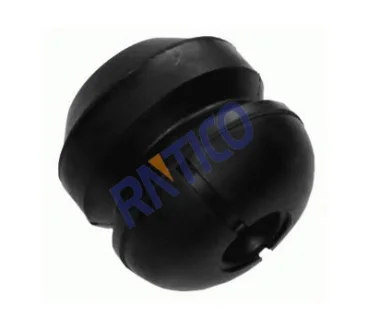
Material of the rubber spring
Rubber springs are made from a variety of materials, including natural rubber, synthetic rubber, and rubber-like materials such as neoprene and silicone. The material used depends on the application and the desired characteristics of the spring.
Natural rubber is the most common material used for rubber springs, as it is relatively inexpensive and has good elasticity and resilience.
Synthetic rubber is more expensive but offers better resistance to heat, cold, and chemicals.
Neoprene and silicone are more expensive than natural rubber but offer superior resistance to heat, cold, and chemicals.
Application of rubber spring
Rubber springs are typically used in applications where a traditional metal spring would not be suitable.
They are often used in applications where vibration dampening is required, such as in automotive suspension systems. They are also used in applications where a traditional metal spring would be too stiff or too soft, such as in medical devices. Rubber springs are also used in applications where a traditional metal spring would be too heavy or too bulky, such as in consumer products.
Rubber springs offer several advantages over traditional metal springs. They are lightweight, which makes them ideal for applications where weight is a concern. They are also resistant to corrosion, which makes them suitable for use in harsh environments. Rubber springs are also relatively quiet, which makes them ideal for applications where noise is a concern.
Rubber springs are also relatively easy to manufacture. They can be produced in a variety of shapes and sizes, and they can be customized to meet specific requirements. This makes them ideal for applications where a traditional metal spring would not be suitable.
Rubber springs are also relatively inexpensive, which makes them a cost-effective solution for many applications. They are also relatively easy to install and maintain, which makes them a good choice for applications where installation and maintenance are a concern.
Despite their many advantages, rubber springs have some drawbacks. They are not as strong as traditional metal springs, which makes them unsuitable for applications where strength is a concern. They are also not as durable as traditional metal springs, which makes them unsuitable for applications where durability is a concern.
Overall, rubber springs are a versatile and cost-effective solution for a variety of applications. They are lightweight, corrosion-resistant, quiet, and relatively easy to manufacture and install.
They are also relatively inexpensive, which makes them a cost-effective solution for many applications. However, they are not as strong or durable as traditional metal springs, which makes them unsuitable for applications where strength or durability is a concern.
RNTICO® – Your Trusted Partner for Standard & Custom Rubber Springs
At RNTICO®, we offer an extensive range of standard rubber springs. To inquire about availability or pricing, please contact us with your OEM part number for a quick response.
If you require a product we don’t currently offer, don’t worry! Our expert team specializes in custom development – simply provide us with your samples or technical drawings, and we’ll engineer the perfect solution for your needs.
📞 Contact us today to discuss your requirements. We guarantee high-quality products and exceptional service tailored to your expectations.