
 English
 العربية
 Français
 Deutsch
 Italiano
 日本語
日本語 한국어
한국어 Polski
 Português
 Русский
 Español
 ภาษาไทย
 Türkçe
 Українська
 Tiếng Việt
Chevron Spring is a rubber pad. It helps reduce vibration and noise. This pad is used in railways and engineering machinery. Its shape resembles the letter “V”, earning it the name chevron spring.
It is worth studying how to select the appropriate Chevron Spring.
Chevron springs find applications across several key sectors.
In the railway industry, it plays a crucial role in improving suspension and vibration control.
Similarly, the automotive sector utilizes the chevron spring to enhance vehicle performance and passenger comfort.
Additionally, the defense industry employs chevron springs for their robust vibration-damping capabilities, which are essential in maintaining equipment reliability.
The industrial machinery sector uses the chevron spring. This helps heavy machinery run smoothly and last longer.
By serving such diverse industries, Chevron Springs demonstrates their versatility and importance in modern engineering solutions.
Finding the right chevron spring for your needs can be simple. Just remember a few key factors that affect performance and lifespan.
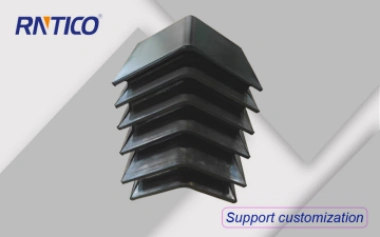
Here’s a look at these important considerations to assist you in selecting the appropriate Chevron Spring:
A. Determine Load Capacity
The load capacity of the chevron spring is a vital aspect to consider.
Start by evaluating the total weight that the springs will need to bear.
This includes not just the static weight but also any dynamic loads that may occur during operation.
Seek out specifications that meet or exceed these load demands to guarantee safety and longevity.
B. Analyze Environmental Factors
The environment in which your chevron springs will operate can greatly impact their effectiveness.
Assess the conditions they will be subjected to:
a. Temperature: Extreme heat or cold can affect the material’s elasticity and functionality. Ensure that the springs are designed to perform within the anticipated temperature range.
b. Corrosive Elements: If your application involves exposure to moisture, chemicals, or salt, choose a material that has a protective coating or is inherently resistant to corrosion.
C. Considering Vibration Damping Requirements
In addition to load support, the chevron spring often plays a role in dampening vibrations.
Identify the specific vibration control needs of your application:
a. Determine if you require control over high-frequency or low-frequency vibrations.
b. Consider whether noise reduction is a secondary objective.
Different materials and designs provide varying levels of damping, so select one that meets your specifications.
D. Evaluate Material Suitability
Different materials have their advantages, from higher strength to greater environmental adaptability.
Common materials include:
a. Metals such as steel for their robustness and durability.
b. Elastomers select synthetic rubber known for its high elasticity, wear resistance, and excellent anti-aging properties.
Examples include nitrile rubber (NBR), chloroprene rubber (CR), or natural rubber (NR).
In addition to these premium rubber materials, rubber-metal composites are also used to enhance the flexibility and durability of the springs.
This combination ensures that the shock absorber maintains stable performance across various harsh environments.
By utilizing such advanced materials, the chevron springs are optimized for both flexibility and long-lasting durability, ensuring reliable operation in demanding applications.
By taking these factors into account, you can confidently choose the best chevron spring to meet your operational needs.
The team from RNTICO has rich experience in the research, development, and production of chevron springs.
RNTICO make custom chevron axle springs. These springs are designed to meet the client’s needs. We focus on performance, durability, and load capacity.
Please feel free to let us know if you need a chevron spring. Our team will customize it for you according to your requirements and ensure the products satisfy you.
Looking forward to your contact!