
 English
 العربية
 Français
 Deutsch
 Italiano
 日本語
日本語 한국어
한국어 Polski
 Português
 Русский
 Español
 ภาษาไทย
 Türkçe
 Українська
 Tiếng Việt
A rubber bushing is a type of vibration-dampening device used to reduce the amount of vibration and noise that is transmitted from one component to another.
They are commonly used in automotive, industrial, and other applications where vibration and noise reduction are important.
They are also used in many consumer products, such as washing machines, refrigerators, and other appliances.
When selecting a rubber bushing, there are several factors to consider, including the type of rubber, the size and shape of the bushing, and the application in which it will be used.
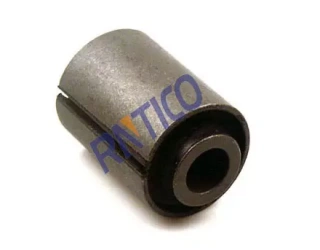
The type of rubber used in a rubber bushing is an important factor to consider. Different types of rubber have different properties, such as flexibility, durability, and resistance to temperature and chemicals.
Natural rubber is the most common type of rubber used in bushings, but synthetic rubber can also be used. Natural rubber is more flexible and durable than synthetic rubber, but it is also more expensive. Synthetic rubber is less expensive and can be used in applications where natural rubber is not suitable.
The size and shape of the rubber bushing are also important factors to consider. The size of the bushing should be chosen based on the size of the components it will be connecting. The shape of the bushing should be chosen based on the application in which it will be used. For example, a cylindrical bushing may be more suitable for a rotating application, while a flat bushing may be more suitable for a linear application.
The application in which the rubber bushing will be used is also an important factor to consider. Different applications require different types of rubber bushings. For example, a rubber bushing used in an automotive application may need to be more durable and resistant to temperature and chemicals than a rubber bushing used in a consumer product.
Additionally, the environment in which the rubber bushing will be used should be taken into consideration. For example, a rubber bushing used in a wet environment may need to be more resistant to water than a rubber bushing used in a dry environment.
Finally, the cost of the rubber bushing should also be taken into consideration. Natural rubber is more expensive than synthetic rubber, so if cost is a factor, synthetic rubber may be a better option. Additionally, the cost of the rubber bushing may vary depending on the size and shape of the bushing, as well as the type of rubber used.
In conclusion, when selecting a rubber bushing, there are several factors to consider, including the type of rubber, the size and shape of the bushing, the application in which it will be used, and the cost.
If you have related product demands, please feel free to contact us.
We will provide you with suitable design solutions and satisfactory products.