
 English
 العربية
 Français
 Deutsch
 Italiano
 日本語
日本語 한국어
한국어 Polski
 Português
 Русский
 Español
 ภาษาไทย
 Türkçe
 Українська
 Tiếng Việt
Rubber sealing strips are vital components in various industries and offer a multitude of benefits that make them a preferred choice for sealing needs.
These strips are known for their durability and flexibility and can withstand harsh weather conditions, making them ideal for outdoor applications.
It’s well known that one of the key advantages of rubber sealing strips is their ability to provide a tight seal.
This helps prevent air, dust, and water infiltration, ensuring optimal protection. Different types of rubber sealing strips are available, each with unique properties.
For example, the EPDM sealing strips, steel frame composite rubber sealing strips, and double composite rubber sealing strips.
In this article, we will delve into the benefits of using rubber sealing strips. We will also explore their various applications, from the automotive industry to the construction sector.
Join us as we explore why these flexible sealing solutions are the best choice for all your sealing needs.
Importance of Rubber Sealing Strips
Rubber sealing strips play a crucial role in various industries, essential for maintaining a secure, weatherproof barrier in both residential and commercial settings.
For example, one of their primary functions is to prevent air leaks, which can improve energy efficiency and reduce heating or cooling costs in buildings.
Also, rubber seals can block water infiltration. By doing so, they protect structures from potential moisture damage, which can lead to costly repairs.
Additionally, these strips enhance comfort by minimizing noise pollution. By sealing gaps, they prevent outside sounds from penetrating indoor spaces.
Types of Rubber Sealing Strips
Rubber sealing strips come in various types, each suited to specific applications. Understanding these types helps you choose the right seal for your needs.
Some common materials have their own unique set of advantages. For example, the EPDM, silicone, NBR, CR, and thermoplastic elastomer.
Here are the three mainstream types:
1) Single material Rubber Sealing Strips
2) Steel Frame Composite Rubber Sealing Strips
3) Double Composite Rubber Sealing Strips
These sealing strips cater to various requirements, like weather resistance or structural support. Selecting the appropriate type ensures optimal performance and longevity.
Single material Rubber Sealing Strips
The material types of rubber sealing strips are diverse, each offering unique performance characteristics due to their distinct chemical structures and formulations, catering to a wide range of application requirements.
The key properties of mainstream sealing strip materials are as follows:
Firstly, Ethylene Propylene Diene Monomer Rubber Sealing Strips
Renowned for exceptional weather resistance, it excels in resisting UV rays, ozone, and extreme weather conditions, with minimal aging, cracking, hardening, or brittleness.
Additionally, it has excellent temperature tolerance (from -40°C to +120°C, with premium formulations reaching up to +150°C).
Owing to its comprehensive performance (weather, heat, and chemical resistance), it is the most widely used general-purpose sealing strip material.
Second, Silicone Rubber Sealing Strips
It has an exceptionally broad temperature range (from -60°C to +200°C, with specialized formulations exceeding 250°C), while maintaining superior performance even at low temperatures.
Its weather and ozone resistance match or surpass EPDM, and it exhibits physiological inertness (non-toxic and odorless).
Silicone rubber is irreplaceable in extreme-temperature applications, as well as in food-grade and medical-grade scenarios.
Third, Nitrile Rubber Sealing Strips have excellent oil resistance, effectively withstanding mineral oils, fuel oils, and animal/vegetable fats, making it the representative material for oil-resistant rubber.
It also offers good abrasion resistance and heat resistance (approximately -30°C to +120°C).
Primarily used in applications requiring oil and wear resistance.
Fourth, Neoprene Rubber Sealing Strips have weather and ozone resistance second only to EPDM and silicone.
It also features good oil resistance, chemical resistance, and inherent flame retardancy (self-extinguishing).
Suitable for applications requiring a combination of weather, oil, and flame resistance.
Fifth, Thermoplastic Elastomer Sealing Strips’ physical properties and some chemical properties can be flexibly tailored through formulation.
Due to their processing advantages and design flexibility, they are increasingly replacing traditional vulcanized rubber in automotive, construction, and other fields.
Sixth, Foamed Rubber Sealing Strips
It has the characteristics of low density, lightweight, and exceptional resilience with superior compression set recovery.
Foamed sealing strips play a critical role in high-demand compression sealing, noise reduction, and thermal insulation applications (particularly effective for irregular gaps).
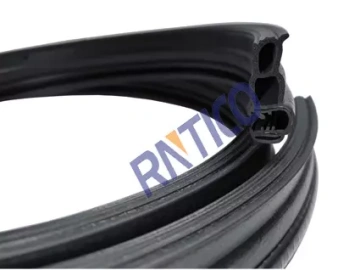
Steel Frame Composite Rubber Sealing Strips
Steel frame composite rubber sealing strips offer robust support. These seals are particularly suited for heavy-duty applications.
By combining steel with rubber, they provide enhanced durability and strength. This makes them ideal for industrial settings where additional support is needed.
Moreover, these strips stand up well to mechanical stress. They maintain their sealing ability under pressure, ensuring reliable performance.
Double Composite Rubber Sealing Strips
Double composite rubber sealing strips integrate two materials. This combination results in improved performance and versatility.
These strips offer better sealing properties, thanks to their dual construction. They are excellent for environments requiring enhanced protective features.
The flexibility of double composite strips allows for easy installation. Their adaptability to different shapes makes them suitable for custom applications.
Advantages of Rubber Sealing Strips
Rubber sealing strips provide numerous benefits, making them essential in many applications. They offer superior protection against environmental factors.
One of the top advantages is their ability to create a strong, weatherproof seal. This prevents water, dust, and air from penetrating structures.
Here’s why rubber sealing strips are a top choice:
•Excellent weatherproofing abilities
•High durability and flexibility
•Cost-effective with low maintenance needs
Moreover, these strips enhance energy efficiency by reducing heat loss. This leads to lower energy bills and a more comfortable indoor environment.
Sealing strips also help in noise reduction by closing gaps that allow sound to pass. This leads to a quieter, more peaceful living space.
Weatherproofing and Insulation
Rubber sealing strips are highly effective at weatherproofing. They prevent unwanted elements from penetrating buildings and vehicles.
Their insulating properties keep indoor spaces warm. By reducing drafts, they contribute to improved energy efficiency.
This weatherproof capability extends to various climates. From hot to cold, these strips can stay in good condition of perform.
Durability and Flexibility
Durability is a hallmark of rubber sealing strips. They withstand harsh conditions without compromising performance.
Flexibility ensures a snug fit in various applications. This flexibility prevents gaps that might develop over time.
Additionally, their ability to rebound after compression enhances longevity. This makes them a reliable choice for sealing needs.
Cost-Effectiveness and Maintenance
Rubber sealing strips are a cost-effective solution. Their long lifespan reduces the need for frequent replacements.
Maintenance requirements are minimal. They remain effective without constant attention or repairs.
Cleaning is straightforward, ensuring lasting performance. Their durability means significant cost savings in the long term.
Applications of Rubber Sealing Strips
Rubber sealing strips are versatile tools with applications spanning various industries. Their adaptability makes them invaluable to both industrial and residential projects.
In the automotive industry, rubber sealing strips enhance vehicle performance. They shield against water and dust while maintaining cabin comfort.
In construction and building, they improve energy efficiency and structural integrity. Sealing strips prevent air leaks and help manage temperature control.
Automotive Industry
In automobiles, rubber sealing strips are crucial. They are found in door seals, window seals, and trunk areas.
These strips help maintain interior conditions, keeping noise and elements out. Enhanced vehicle longevity and comfort are the results.
Construction Engineering
In construction, sealing strips improve energy efficiency. They minimize heat loss and prevent drafts in buildings.
Additionally, these strips play a significant role in sealing windows and doors. This ensures a tight seal that aids in noise reduction and comfort.
These strips’ robust nature also means they are utilized in the marine and aerospace industries. Their resistance to extreme conditions is crucial for these demanding environments.
Installation and Customization
Installing rubber sealing strips is a straightforward process. Their flexibility allows for easy fitting into diverse spaces.
Customization options ensure that rubber sealing strips meet specific needs. They can be tailored to fit unique shapes and sizes.
Some seals come with adhesive backing, simplifying the installation further. This feature ensures a secure and precise fit.
Quality seals maintain their properties over time, requiring minimal adjustments. Proper installation enhances longevity and performance.
Easy Installation and Custom Design
Rubber sealing strips are designed for hassle-free installation. This convenience saves time and ensures a snug fit.
Customization options include color matching and specific sizing. These choices allow for seamless integration into existing designs.
Tips for Selecting the Right Seal
Choosing the right seal depends on application needs. Consider material compatibility and environmental conditions.
Also, evaluate the size and shape of the required seal. Proper selection ensures optimal performance and durability.
Environmental Impact and Sustainability
Rubber sealing strips contribute positively to environmental sustainability. They enhance energy efficiency by reducing heat loss and drafts.
Many rubber seals are made from recycled materials. This reduces waste and supports eco-friendly manufacturing processes.
Their durability minimizes the need for frequent replacements. This long lifespan helps conserve resources and reduce landfill waste.
Conclusion and Next Steps
Rubber sealing strips offer numerous benefits across various applications. Their advantages, from energy efficiency to cost-effectiveness, make them a smart choice.
For those looking to implement these solutions, consider high-quality rubber seals. Proper selection and installation are key to maximizing their benefits in your projects.
RNTICO has created and supplied many rubber sealing strips to clients in many countries for 30 years.
If you need any rubber sealing strips for any purpose, please get in touch with us.
We can develop customized rubber sealing strips for you based on your drawings and performance requirements.