
 English
 العربية
 Français
 Deutsch
 Italiano
 日本語
日本語 한국어
한국어 Polski
 Português
 Русский
 Español
 ภาษาไทย
 Türkçe
 Українська
 Tiếng Việt
Części gumowe amortyzujące są szeroko stosowane w różnych branżach ze względu.
Obecnie, RNTICO has developed thousands of rubber shock-absorbing parts, which are mainly used in heavy-duty trucks, maszyny budowlane, maszyny przemysłowe, itp.
At the same time, we can develop and produce products based on samples or drawings according to customer demands.
We have an experienced team for R&D and production.
We can produce products that meet the original quality by rigorous material selection and strict production processes.
Application of rubber shock-absorbing parts in mechanical equipment
1. Industrial machinery: Rubber shock-absorbing parts are commonly used in various mechanical equipment in factories, such as vibrating screens, presses, punching machines, wtryskarki, itp.
They can reduce the vibration and noise of machines, protect equipment components, and extend the service life of the machines.
2. Electronic equipment: In electronic equipment, rubber shock-absorbing parts are usually used to fix and dampen hard drives, fans, power supply units, etc., to prevent damage to electronic components caused by vibrations generated by the equipment during operation.
3. Vehicles: In vehicles such as cars, trains, and airplanes, rubber shock absorbers are widely used to reduce vibration and impact during vehicle driving, improve ride comfort, and protect the vehicle’s mechanical parts.
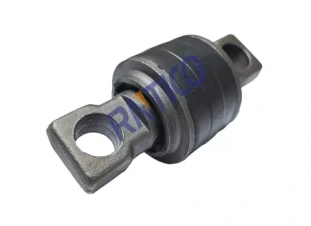
4. Construction equipment: In the construction industry, rubber shock-absorbing parts are often used in construction machinery and equipment, such as cranes, concrete mixers, etc., to reduce vibration and noise generated by equipment during operation, and to protect the building structure.
5. Medical equipment: In the medical industry, rubber shock-absorbing parts are used in medical equipment, such as nuclear magnetic resonance machines, ultrasonic equipment, etc., Aby zmniejszyć wibracje podczas obsługi sprzętu i zapewnić dokładność i stabilność sprzętu.
Diversity of rubber shock absorbers
In different application scenarios, the material and structural design of rubber shock absorbers may have differences in the following aspects:
1. Wybór materiału: Depending on the demands of the application scenario, the material selection of rubber shock-absorbing parts may be different.
Na przykład, we may select high-temperature-resistant rubber materials or rubber materials with wear-resistant materials added for high-temperature environments or scenarios that require wear-resistant performance.
2. Structural design: Different application scenarios will also have an impact on the structural design of shock-absorbing parts.
Na przykład, for scenes that need to withstand the vibration of large mechanical equipment, a more durable structure may be designed, while for some lightweight equipment, a more flexible structure may be designed to adapt to different vibration frequencies.
3. Shock absorption effect: Different application scenarios have different requirements for shock absorption effects.
Some scenarios may focus more on reducing high-frequency vibrations, while other scenarios may pay more attention to the shock absorption effect of low-frequency vibrations.
All in all, the material and structural design of rubber shock-absorbing parts will be adjusted according to specific application scenarios and needs to ensure that they can achieve the best shock-absorbing effect in different environments.
Material selection for rubber shock-absorbing parts in high-temperature environments
1. High-temperature resistance: The primary consideration is the high-temperature resistance of the material.
It is necessary to choose a rubber material that can maintain stable performance in high-temperature environments, to ensure that the rubber shock-absorbing parts will not fail or deform under high-temperature conditions.
2. Heat aging resistance: The material needs to have good heat aging resistance performance, be able to maintain elasticity and shock absorption effects for a long time, and not be degraded or damaged due to high temperatures.
3. Chemical stability: In high-temperature environments, Materiały muszą mieć dobrą stabilność chemiczną i być w stanie oprzeć się korozji chemicznej lub utlenianiu, które mogą wystąpić w wysokich temperaturach.
4. Structural stability: The structural stability of the material is also one of the considerations.
It is necessary to ensure that no structural deformation or cracking occurs in high-temperature environments.
5. Wear resistance: Some application scenarios in high-temperature environments may be accompanied by friction and wear, so the wear resistance of the material also needs to be considered.
Based on the above considerations, common rubber material choices include silicone rubber (Silicone), fluorine rubber (FKM), kauczuk chloroprenowy (CR), itp.
Wszystkie dobrze opierają się wysokich temperatur i są stabilne w chemikaliach. Są dobre do stosowania w obszarach o wysokiej temperaturze jako części gumowe.
If you have related product demands, please feel free to skontaktuj się z nami.
We will provide you with suitable design solutions and satisfactory products.